3 How To…Replace an Electrical Outlet
>> Wednesday, January 11, 2012
Note to the reader: Just to be on the safe side (and to protect my conscience from becoming overwhelmed with guilt when you electrocute yourself) no two houses are wired exactly the same and my experience with replacing outlets may not match up exactly to what needs to be done at your own construction site…now that we have that out of the way, let’s get down to DIY business.
I wanted to replace all of the outlets in my house for a number of reasons, but mainly because they were all two prong outlets instead of three and most importantly, I was not a fan of the ancient manila hue. An unsightly hassle that needed to be corrected.
When I updated my bathrooms, I replaced the original electrical outlets with GFCI outlets (the funny looking ones with the red buttons) since building code require them in all wet areas, but for general around the house bedroom/bathroom/living room outlets, a simple switch with a 15 amp/125 volt receptacle should do the trick. If you are unsure which type of receptacle you need, take an old one into the hardware store and a friendly employee should be able to help you figure out exactly what you need.
 | |

Before I began, I turned off all of the electricity in my house. I’m a big chicken and don’t trust just turning off a breaker or two. Then using a volt tester, I double checked to make sure the outlets were not still live. Then, using a screwdriver, I removed the cover plate…


…and detached the old outlet from the electrical box inside the wall.

Loosened the screws on either side of the outlet to release the wires…

Newer outlets usually have instructions on the back outlining where the black (hot) and white (neutral) wires should be reattached.

Loop the wires around their designated screw and tighten to secure into place.
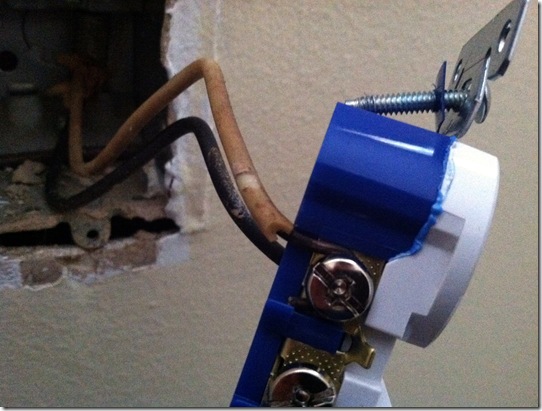
Then gently push the outlet back into place, reattach to the electrical box and secure the cover plate. Easy as pie and once you get the hang of it, this DIY shouldn’t take you more than a couple of minutes per outlet.
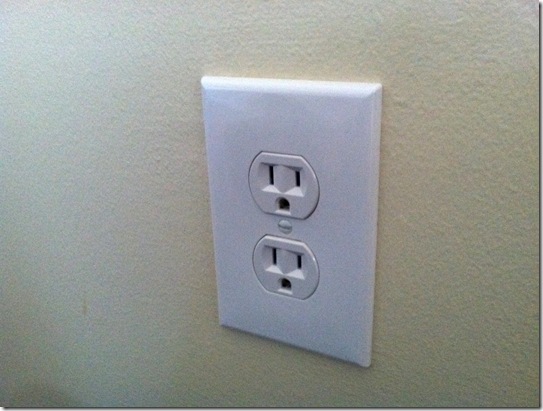
But wait! What happens when you stumble across an outlet with not one but two white wires and two black wires? No worries. That’s why they give you two screws on each side of the outlet. Crisis averted.